Chapter 1 · The Early Days
How Hospitals Really Make Money — and What Doctors Aren't Taught
From the back row of a Miami classroom to the cath lab — and the pay stub that changed how one cardiologist saw medicine.
The book opens where its author did: in Miami, Florida, the son of immigrant parents — a civil engineer father and a mother who worked in a police crime-scene unit. In a family that prized education, becoming a high-achieving professional wasn't a suggestion. It was expected. Dr. Siddiqui is candid that, as a teenager in a high-school medical magnet program, he didn't always deliver the grades to match — and that he was rather good at rebelling.
Student daze
He was never the top student. He preferred the back of the room, multitasking his way through lectures — and spent his nights as a DJ, mixing his own tracks. (He notes the irony: a lifelong music lover who ended up listening to heartbeats all day.) The turning point came late in medical school, with the question every student eventually faces: what am I actually going to do with this? He ran through the specialties one by one, testing his gut reaction to each. General practice, surgery, orthopedics, pediatrics — nothing. Cardiology — a flicker. Interventional cardiology, with its years of extra training and work done with the hands, threading wires the width of a hair into the arteries of the heart — that was it.
A super-specialist on his own
Residency, he argues, is the comparatively easy part: you are saving lives, but with an attending physician behind you to check your work. After training he was recruited into a large hospital system and placed in Central Florida, close to his parents. The work was the same; the safety net was gone. "Welcome to healthcare," as he puts it.
That is where he began to see the system around him. Walking through a typical emergency-room visit, the chapter traces how a patient becomes a series of codes and charges — from the insurance card requested at the door, to the diagnosis codes (DRGs) that set the bill, to the barcode on the wristband that records every item used. Many of those charges, he notes, are entirely legal; they are simply invisible to most patients and most young doctors.
"I need to work smarter, not harder. I need to find my freedom."Chapter 1, The Dark Side of Medicine
The pay stub moment
The chapter's sharpest passage is a piece of simple arithmetic: what a physician is paid for a procedure, set against what the hospital bills for the same procedure performed by the same hands. Looking at his own pay stubs, he realized how lopsided that equation was — and that the business side of medicine was something he could learn. His answer was to step off the "hamster wheel" and open a physician-run outpatient cath lab: more personal risk, more accountability to patients and staff, and far more control. He calls the gap between how medicine is taught and how it actually runs a "shadow economy" — right under everyone's nose, and almost never explained.
Debt, rest and owning the building
The rest of the chapter widens out into lessons for anyone entering the field. Young doctors carry enormous debt and are rarely taught about interest, credit or loans — yet a physician is, in effect, a business, and should start acting like one. Long residency hours build experience but also exhaustion, and a tired doctor is a less effective one; even fifteen to thirty minutes a day of reading something new is, in his words, a way to let the mind recover. He closes with a story from a middle-school career day, where instead of operating-room drama he explained to a room of surprised students why a doctor should own the building their practice sits in — and how many procedures a year's rent really represents.
Ideas to take away
- Medicine runs on an economy most clinicians are never taught. Learn it early.
- Residency has a safety net; independent practice doesn't. Prepare for the difference.
- Know what your work earns for the institution, not only what it pays you.
- A physician is a business. Debt, credit and ownership deserve the same attention as clinical skills.
- Rest is part of the job. A well-rested doctor serves patients better.
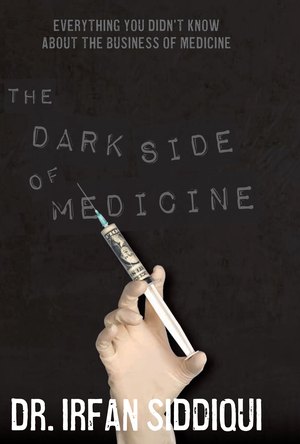
This is a summary. The full chapter — with the numbers, the stories and the step-by-step thinking — is in the book.
Buy The Dark Side of MedicineThis companion summarizes the author's views and experience. It is not medical, legal or financial advice.